
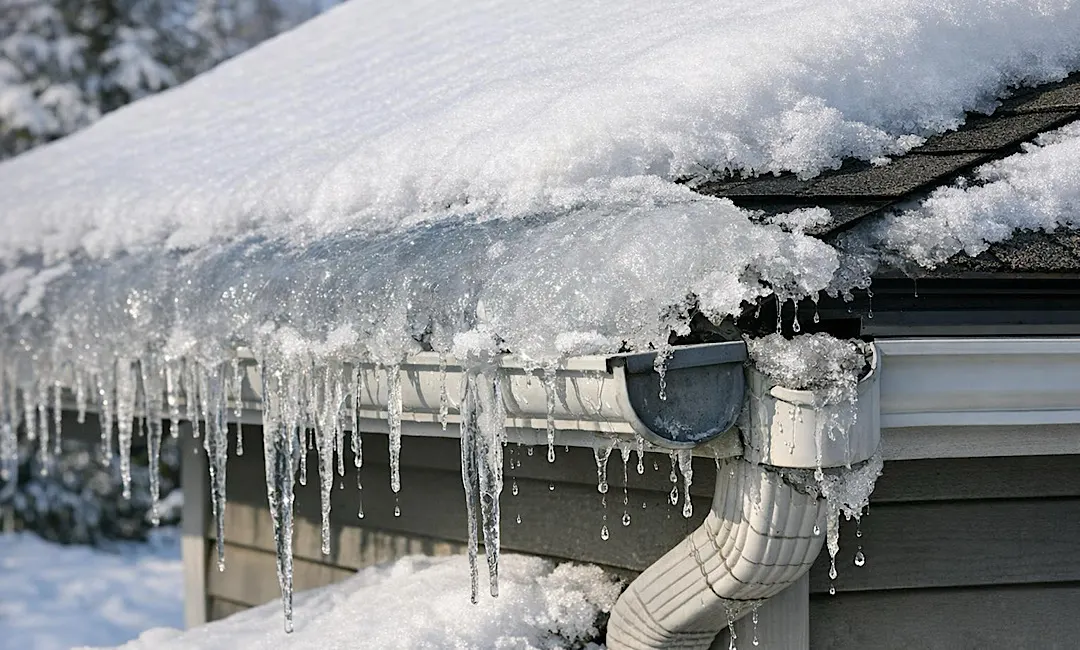
Why Ice Dams Form (and How Soffit Ventilation Prevents Them)
If you've ever seen a thick ridge of ice built up along the edge of a roof in the middle of a Chicago winter, you've seen an ice dam. They look like a minor cosmetic issue, but ice dams are one of the most common causes of winter roof leaks — and the root cause is usually not the weather itself, but what's happening inside the attic.
How Ice Dams Actually Form
Ice dams start with heat escaping from inside the house into the attic. That heat warms the roof deck unevenly — usually warmer near the ridge, colder near the eaves. Snow on the warmer part of the roof melts, runs down toward the colder eave, and refreezes right at the edge, where the roof is coldest. Over time, that ice builds into a dam that blocks further meltwater from draining off the roof at all.
Once that water has nowhere to go, it backs up under the shingles — and shingles are designed to shed water running downhill, not sit in standing water. That's when it finds its way into the attic, the insulation, and eventually the ceiling below.
Why This Happens More on Some Roofs Than Others
Two roofs on the same street can have very different ice dam problems, and the difference usually comes down to attic ventilation and insulation. A poorly ventilated attic traps heat, creating exactly the uneven roof temperature that causes ice dams. A well-ventilated attic stays closer to the outside temperature all the way across the roof deck, so snow melts (or doesn't melt) more evenly.
The Role of Soffit Ventilation
This is where soffit ventilation comes in. Properly vented soffit allows fresh, cold air to enter at the eaves and flow up through the attic to ridge or roof vents, carrying warm, moist air out. That constant airflow keeps the roof deck at a more even temperature, which is one of the most effective ways to reduce ice dam formation at the source — rather than just dealing with the ice after it forms.
If your soffit is old, damaged, or was never properly vented to begin with, that airflow gets cut off no matter how good your attic insulation is otherwise.
What If the Damage Is Already Done?
If ice dams have already caused damage to your gutters or roof edge, that's a separate repair from fixing the root cause. Many homeowners address both at once — repairing what's damaged, and improving soffit ventilation (or adding ice dam cable for extra protection) so it doesn't happen again next winter.
Signs You Might Have a Ventilation Problem
- Ice dams forming in the same spot year after year
- Icicles that seem unusually large or thick
- Snow melting unevenly across your roof — patchy instead of uniform
- Frost or moisture visible on the underside of the roof deck in the attic
If any of this sounds familiar, it's worth having your soffit and attic ventilation checked before the next freeze-thaw cycle.
FAQ
- Do ice dams mean my roof is bad? Not necessarily — ice dams are more often a sign of an attic ventilation or insulation issue than a problem with the roofing material itself.
- Can I just remove the ice myself? Removing ice from a roof can be risky and can damage shingles if not done carefully. It’s generally safer to have a professional assess and address both the ice and the underlying cause.
- Will adding insulation alone fix the problem? Insulation helps keep heat out of the attic, but ventilation is what actually moves that heat and moisture out. Most lasting fixes involve both.
- How much does soffit ventilation cost to fix? Cost depends on your home’s size and the extent of the existing soffit damage. We provide a free, itemized estimate after inspecting your attic and roofline.
- Is ice dam cable a permanent fix? Ice dam cable helps manage meltwater at the roof edge, but it works best as a complement to good ventilation, not a full replacement for it.
Worried About Ice Dams This Winter?
Call B&B Roofing and Exteriors for a free soffit and attic ventilation assessment before the next freeze.
